

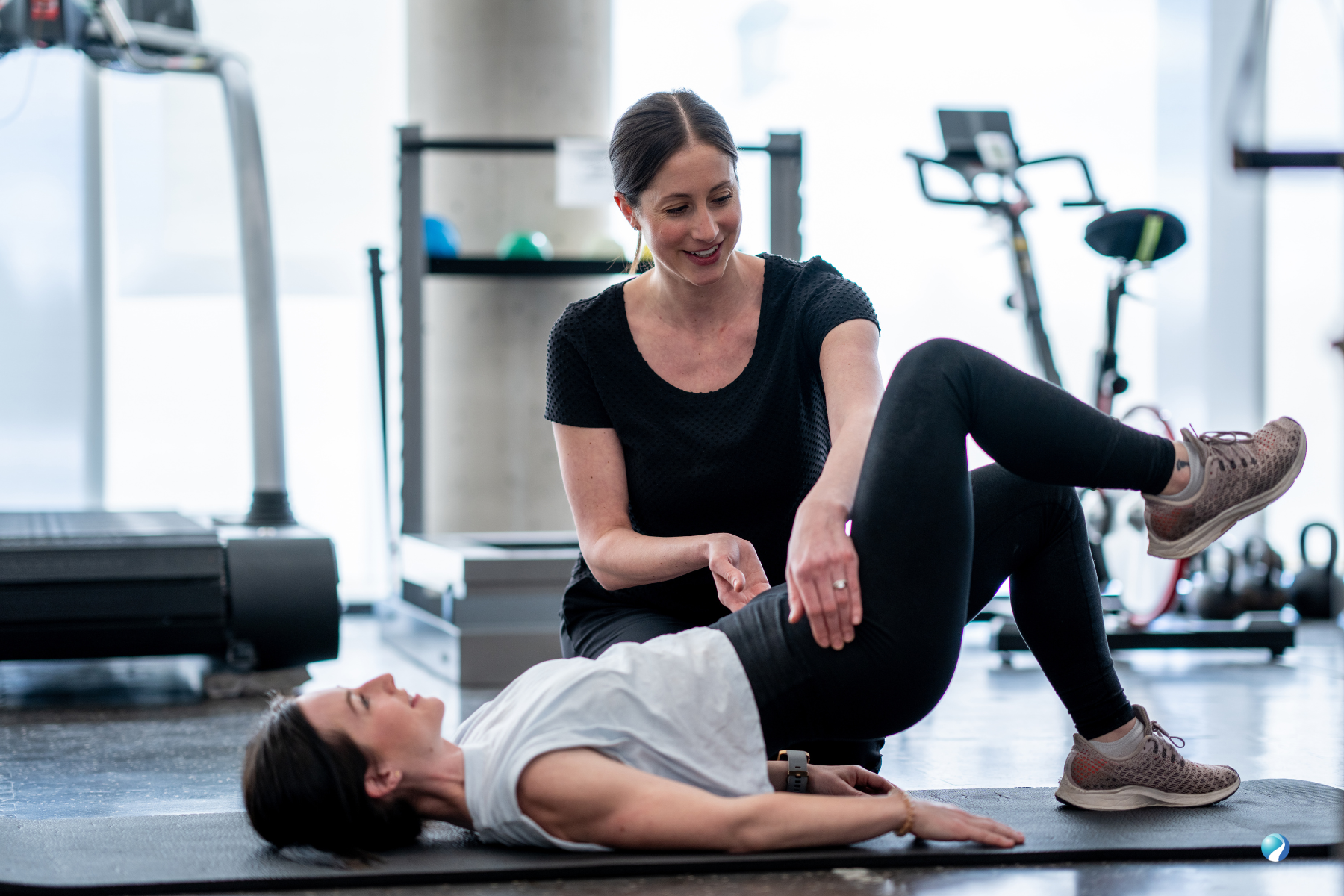
Pelvic Floor Therapy In Mississauga
Pelvic Floor Physiotherapy in Mississauga
Pelvic floor concerns are common, but many people are unsure where to turn for help. At The Muscle & Joint Clinic, we offer pelvic floor physiotherapy to help patients manage symptoms related to bladder leakage, pelvic pain, pelvic organ prolapse, postpartum recovery, bowel concerns, painful intercourse, and pelvic floor muscle dysfunction.
Pelvic floor physiotherapy is a conservative, evidence-informed treatment approach that focuses on the muscles, joints, nerves, connective tissues, and movement patterns that support the pelvis, bladder, bowel, core, hips, and lower back. These muscles play an important role in bladder control, bowel control, sexual health, pregnancy recovery, posture, breathing, and daily movement.
Whether your symptoms started after pregnancy, surgery, injury, menopause, chronic tension, or gradually over time, our goal is to provide a comfortable, respectful, and individualized approach to care.
What Is the Pelvic Floor?
The pelvic floor is a group of muscles located at the base of the pelvis. These muscles support the bladder, uterus or prostate, rectum, and surrounding organs. They also help control urination, bowel movements, sexual function, and core stability.
Pelvic floor problems can occur when these muscles are too weak, too tight, poorly coordinated, painful, or unable to relax properly. Some patients need strengthening. Others need relaxation, mobility work, breathing strategies, manual therapy, or better coordination. This is why a proper assessment is important.
Pelvic floor physiotherapy is not just about doing Kegel exercises. In fact, for some people, Kegels may not be the right starting point. A pelvic health physiotherapist can assess how your pelvic floor is functioning and create a treatment plan based on your specific symptoms and goals.
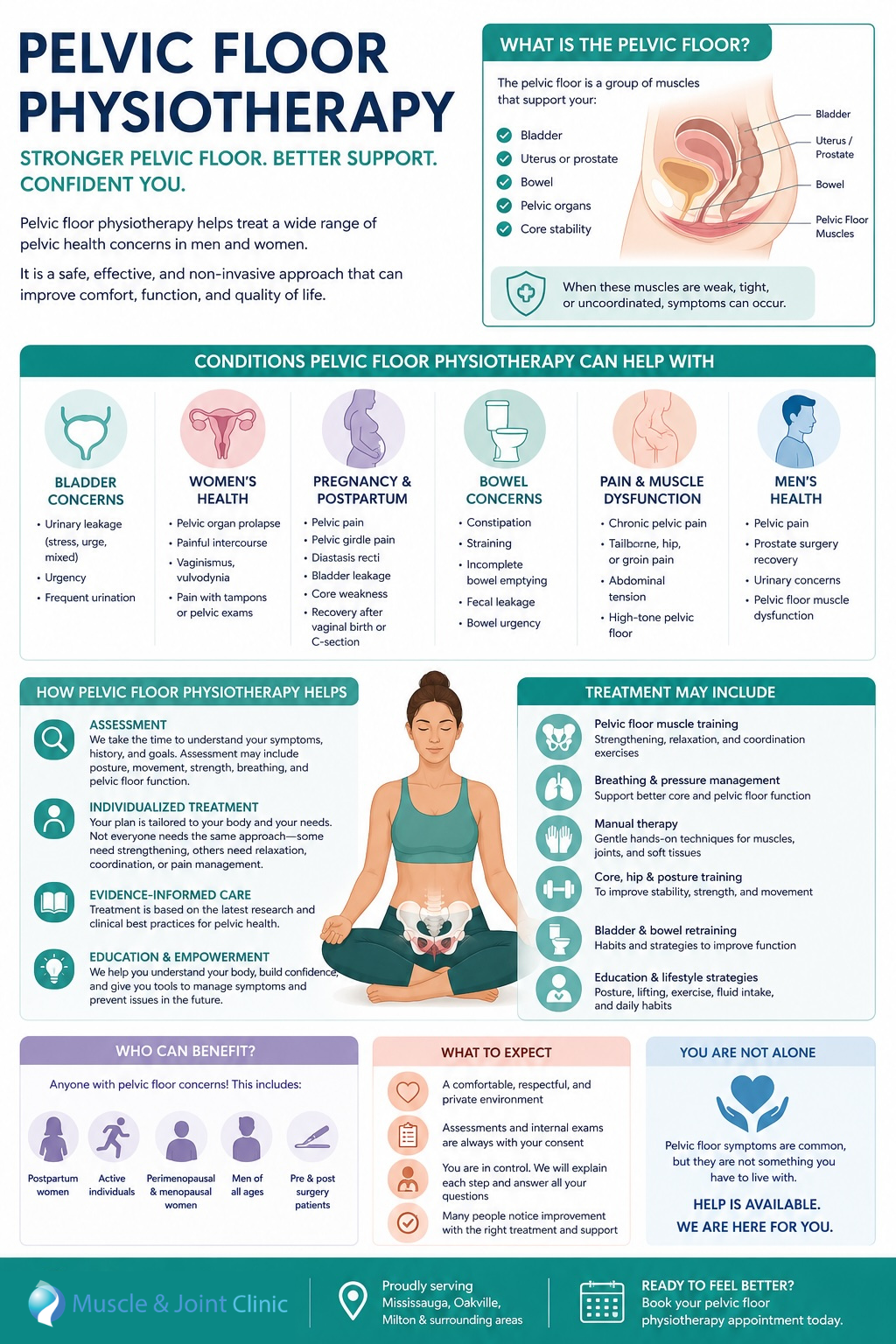
Conditions Pelvic Floor Physiotherapy May Help With
Pelvic floor physiotherapy may help with a wide range of concerns, including:
Urinary leakage with coughing, sneezing, laughing, jumping, running, or lifting
Urgent need to urinate or difficulty making it to the bathroom on time
Frequent urination during the day or night
Stress urinary incontinence, urge urinary incontinence, or mixed urinary incontinence
Pelvic organ prolapse symptoms, including pressure, heaviness, or a bulging sensation
Postpartum recovery after vaginal delivery or C-section
Pregnancy-related pelvic pain, low back pain, hip pain, or pelvic girdle pain
Diastasis recti and core weakness after pregnancy
Painful intercourse, pelvic pain, vulvar pain, or vaginal pain
Vaginismus, vulvodynia, or pain with tampon use or pelvic exams
Constipation, straining, or difficulty emptying the bowels
Fecal leakage or bowel urgency
Tailbone pain, hip pain, groin pain, or lower abdominal tension
Pelvic floor muscle tightness, weakness, or poor coordination
Recovery after pelvic surgery, where appropriate and medically cleared
If you are unsure whether pelvic floor physiotherapy is right for your symptoms, our team can help guide you through the next steps.
Pelvic Floor Physiotherapy for Urinary Incontinence
Urinary incontinence is one of the most common reasons people seek pelvic floor physiotherapy. Leakage may happen with coughing, sneezing, laughing, lifting, running, jumping, or exercise. Some people also experience urgency, where they suddenly feel they need to urinate and may have difficulty getting to the bathroom in time.
Pelvic floor muscle training is widely recognized as a first-line conservative treatment for many types of urinary incontinence. However, the key is learning how to activate, relax, and coordinate the pelvic floor properly. Many people are surprised to learn that they may be doing pelvic floor exercises incorrectly, holding their breath, gripping their abdominal muscles, or over-tensing muscles that already need to relax.
At The Muscle & Joint Clinic, pelvic floor physiotherapy may include education, guided pelvic floor muscle training, bladder retraining, breathing strategies, core strengthening, hip mobility work, posture advice, and lifestyle modifications.
Pelvic Floor Physiotherapy After Pregnancy
Pregnancy and childbirth can place significant stress on the pelvic floor, abdominal wall, hips, pelvis, and lower back. Some symptoms appear right away, while others develop months or even years later.
Postpartum pelvic floor physiotherapy may help with bladder leakage, pelvic heaviness, pain with intercourse, scar sensitivity, pelvic girdle pain, low back pain, diastasis recti, weakness, and difficulty returning to exercise.
Care is tailored to your stage of recovery. Treatment may focus on breathing, gentle pelvic floor activation, relaxation, scar tissue mobility when appropriate, core rehabilitation, hip and back strength, posture, lifting mechanics, and a gradual return to daily activity or fitness.
You do not need to “just live with it” after having a baby. Many pelvic floor symptoms are common, but they can often be improved with the right care.
Pelvic Pain and High-Tone Pelvic Floor Dysfunction
Not all pelvic floor problems are caused by weakness. In some cases, the pelvic floor muscles become overactive, tense, painful, or unable to relax fully. This is sometimes called high-tone pelvic floor dysfunction.
Symptoms may include pelvic pain, pain with intercourse, pain with tampon use, vulvar pain, tailbone pain, groin pain, urinary urgency, constipation, or a feeling of pressure or tightness in the pelvis.
For these patients, treatment may focus on down-training the nervous system, breathing techniques, gentle mobility, manual therapy, relaxation strategies, education, and improving coordination rather than simply strengthening the pelvic floor.
This is another reason why a proper assessment matters. The right treatment depends on whether the pelvic floor needs strengthening, relaxation, coordination, or a combination of all three.
What to Expect During Your Pelvic Floor Physiotherapy Visit
Your first visit begins with a detailed discussion about your symptoms, medical history, pregnancy or birth history if relevant, surgeries, medications, lifestyle, bladder habits, bowel habits, pain patterns, and goals.
Your physiotherapist may assess posture, breathing, core function, hip mobility, lower back movement, pelvic alignment, muscle strength, and movement patterns. Depending on your symptoms and consent, pelvic floor assessment may involve external assessment and, when appropriate, internal assessment. Internal assessment is only performed with your informed consent and is never mandatory.
Your comfort, privacy, and dignity are always respected. You are in control of the process, and your physiotherapist will explain each step before proceeding.
Treatment May Include
Pelvic floor physiotherapy treatment may include:
Pelvic floor muscle training
Pelvic floor relaxation and coordination exercises
Bladder and bowel retraining
Breathing and pressure management strategies
Core and hip strengthening
Postpartum rehabilitation
Manual therapy for muscles, joints, and soft tissues
Scar tissue education and mobility, where appropriate
Education about posture, lifting, exercise, and daily habits
Home exercises tailored to your condition
Lifestyle strategies for bladder, bowel, and pelvic health
The goal is not only to reduce symptoms, but also to help you understand your body, improve confidence, and return to the activities that matter to you.
Why Choose The Muscle & Joint Clinic for Pelvic Floor Physiotherapy?
At The Muscle & Joint Clinic, we take a whole-body approach to pelvic health. Pelvic floor symptoms are often connected to the lower back, hips, core, breathing, posture, pregnancy history, exercise habits, and daily movement patterns.
Our team provides patient-centred care in a supportive and professional environment. We understand that pelvic health concerns can feel private or difficult to talk about, and we work hard to make every patient feel comfortable, heard, and respected.
With clinic locations serving Mississauga, Oakville, Milton, and surrounding communities, we are proud to offer pelvic floor physiotherapy as part of our multidisciplinary rehabilitation services.
Pelvic Floor Physiotherapy Near Me
If you are searching for pelvic floor physiotherapy near me, pelvic health physiotherapy in Mississauga, pelvic floor physiotherapy in Oakville, or pelvic floor physiotherapy in Milton, The Muscle & Joint Clinic is here to help.
Our pelvic health physiotherapy services are designed for people experiencing bladder leakage, pelvic pain, postpartum concerns, prolapse symptoms, bowel issues, pain with intercourse, and pelvic floor dysfunction.
Book Pelvic Floor Physiotherapy Today
Pelvic floor symptoms can affect your confidence, comfort, exercise, work, sleep, relationships, and quality of life. You do not have to ignore these symptoms or wait for them to get worse.
Book an appointment with The Muscle & Joint Clinic today to learn whether pelvic floor physiotherapy is right for you.
Frequently Asked Questions
Is pelvic floor physiotherapy only for women?
No. Pelvic floor physiotherapy is commonly associated with pregnancy and postpartum recovery, but pelvic floor dysfunction can affect many people. Pelvic floor physiotherapy may help with bladder concerns, bowel concerns, pelvic pain, and pelvic floor muscle coordination issues.
Do I need a doctor’s referral?
In many cases, you do not need a doctor’s referral to see a physiotherapist. However, some insurance plans may require a referral for reimbursement. If you have unexplained bleeding, signs of infection, severe or worsening pelvic pain, or new neurological symptoms, you should speak with a physician.
Is pelvic floor physiotherapy just Kegels?
No. Pelvic floor physiotherapy is much more than Kegels. Some patients need strengthening, but others need relaxation, coordination, breathing strategies, bladder retraining, manual therapy, or core and hip rehabilitation.
Can pelvic floor physiotherapy help bladder leakage?
Yes, pelvic floor physiotherapy is commonly used as a first-line conservative treatment for urinary leakage, including stress urinary incontinence, urge urinary incontinence, and mixed urinary incontinence.
Can pelvic floor physiotherapy help after pregnancy?
Yes. Postpartum pelvic floor physiotherapy may help with bladder leakage, pelvic pain, pelvic pressure, diastasis recti, core weakness, low back pain, hip pain, and return to exercise after childbirth.
Is an internal exam required?
No. An internal exam is never mandatory. Your physiotherapist will explain your options, obtain informed consent, and respect your comfort level. Many aspects of pelvic floor physiotherapy can begin with education, external assessment, breathing, movement, and exercise.
How many visits will I need?
This depends on your symptoms, goals, medical history, and assessment findings. Some patients notice improvement within a few visits, while others benefit from a longer rehabilitation plan. Your physiotherapist will discuss a personalized plan after your assessment.
What areas do you serve?
The Muscle & Joint Clinic provides pelvic floor physiotherapy for patients in Mississauga, Oakville, Milton, and nearby communities.
FAQs
-
Pelvic floor physiotherapy is a specialized form of physiotherapy that helps assess and treat concerns related to the pelvic floor muscles. These muscles support the bladder, bowel, pelvic organs, core, hips, and lower back. Treatment may help with bladder leakage, pelvic pain, postpartum recovery, pelvic organ prolapse symptoms, constipation, and pelvic floor muscle dysfunction.
-
Pelvic floor physiotherapy may benefit people experiencing urinary leakage, frequent urination, urgency, pelvic pain, pain with intercourse, constipation, bowel leakage, pelvic pressure, pregnancy-related discomfort, postpartum symptoms, or core weakness. It may also help patients recovering after childbirth or certain pelvic surgeries, when medically appropriate.
-
No. Pelvic floor physiotherapy can help both women and men. While many people associate pelvic health with pregnancy and postpartum recovery, pelvic floor dysfunction can also affect men, including those with pelvic pain, urinary concerns, bowel issues, or recovery needs after prostate-related treatment or surgery.
-
No. Pelvic floor physiotherapy is much more than Kegels. Some patients need strengthening, but others need relaxation, coordination, breathing strategies, bladder or bowel retraining, manual therapy, core strengthening, or posture and movement education. A pelvic health physiotherapist can help determine the right approach based on your symptoms.
-
In many cases, you do not need a doctor’s referral to see a physiotherapist. However, some insurance plans may require a referral for coverage. If you have unexplained bleeding, signs of infection, severe pain, fever, new numbness, or sudden changes in bladder or bowel control, it is important to speak with a physician first.